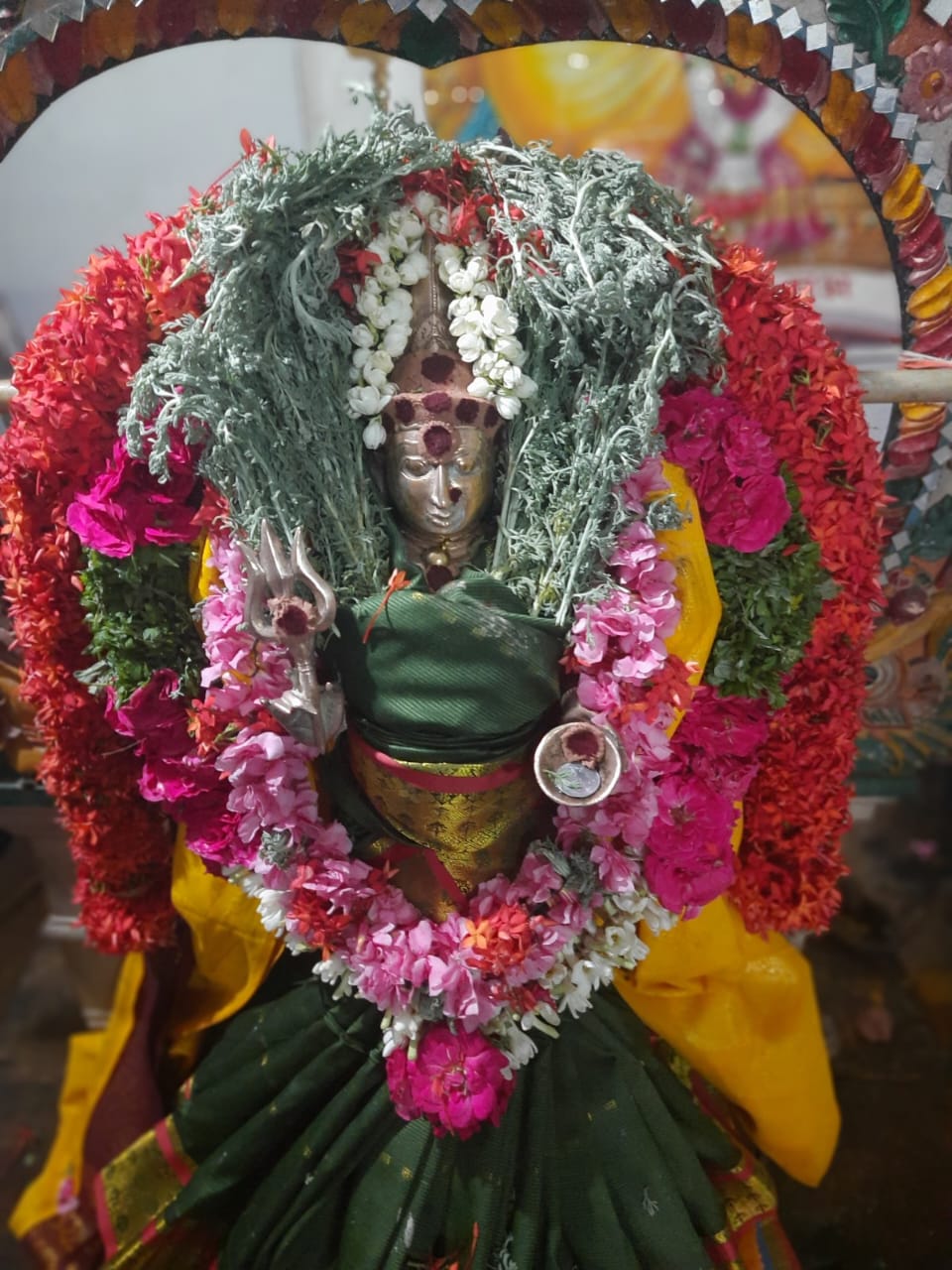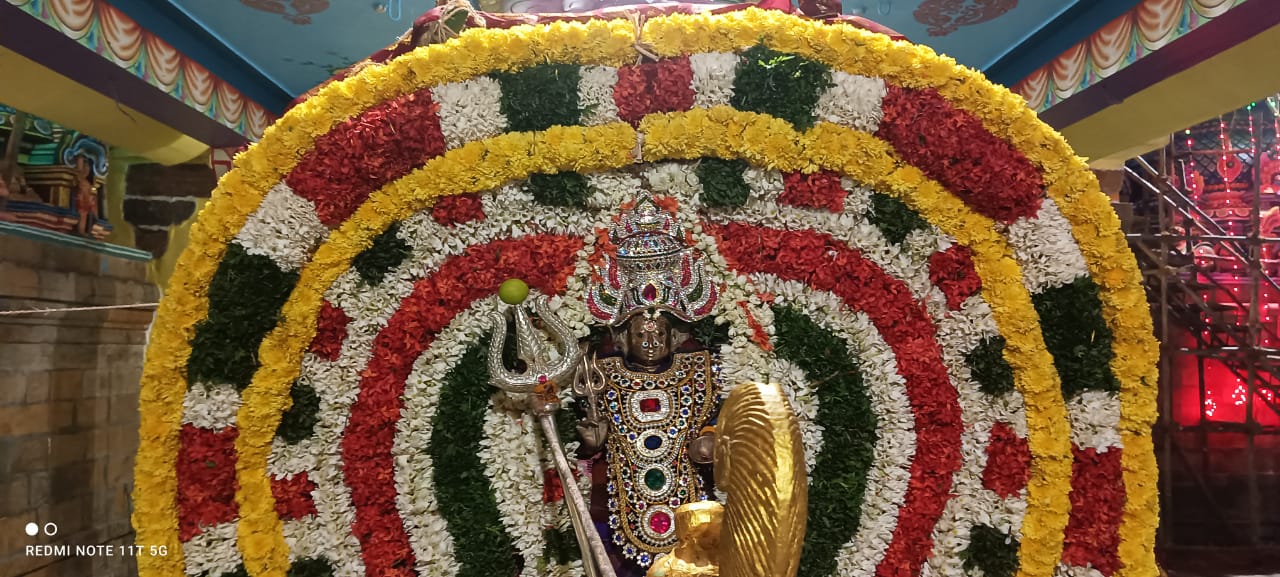
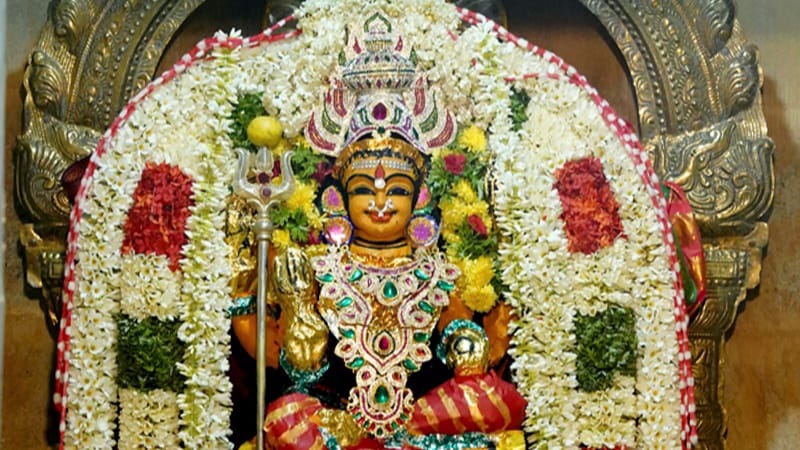
Chellandiamman (also spelled Sellandiamman or Chellandi Amman) holds a significant role in Tamil culture, particularly in central and western Tamil Nadu. The proliferation of these temples is rooted in tradition: Sellandiamman is considered a guardian and protector, and communities believe that her presence wards off evil and brings prosperity. Each locality or village often has its own shrine, reflecting the deeply localized nature of Sellandiamman worship. Several Tamil communities and other local groups, recognize Chellandiamman as their kuladeivam (ancestral/family deity).
Generation after generation, families perform periodic rituals and major life events, such as marriages and ear-piercing ceremonies, at her temples as a sign of familial continuity and cultural bonding. This has led to multiple temples dedicated to her within a single district like Trichy, as each community desires its own connection to the goddess.
Annual temple festivals like Aadi Perukku, Navaratri, and Shivaratri draw large gatherings, reinforcing communal ties. These events promote cultural identity and provide an occasion for mass participation and charity. Some temples are considered over 2,000 years old and believed to have marked or protected ancient settlements and chieftain boundaries.
Her worship is deeply rooted in local tradition and remains central to rural identity, local justice, and the celebration of heritage in Tamil culture, serving as both protector and unifier.
The female Dwarapalas (or Dwarapalikas) of the Devi (goddess) are fearsome female guardians who protect her temples. Their specific names can vary depending on the particular goddess, regional traditions (Agamas), and whether the deity is in a fierce (ugra or krodha) or benign (saumya) form. Shankanidhi and Padmanidhi are the female guardians associated with Durga Devi and other deities in specific enclosures (avaranas) of a temple complex. Tarjani Mudra (Warning Gesture/Single Finger): The "single finger" pose, where the index finger is raised (often in a threatening or admonishing gesture), is known as the Tarjani Mudra. It serves to remind worshippers to exercise restraint, respect, and caution when entering a sacred precinct. It is a sign of authority, warning against negative thoughts or improper behavior before entering the sanctum. This signifies the guardian warning against evil influences and reminding visitors of the rules of the sanctum.
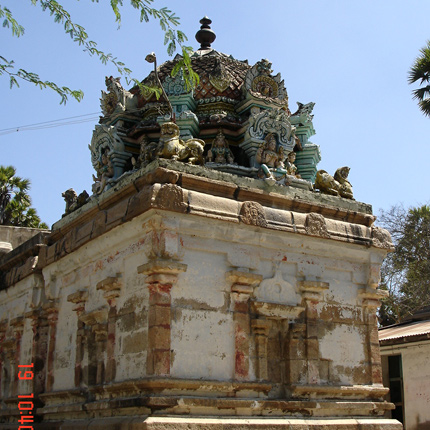
Our temple in Agalanganallur has been our Gramadevadha for our families for the past 250 years. It is located near the Kayapalguni river which flows from north to south and then east. The later Chola, a minor king Agalangan (referred as Rajendra Chola III, who reigned from 1246 AD to 1279 AD) and later the Nayakkar rulers may have contributed to the temple’s renovation. It is believed that devotees seeking child blessing circumambulate the temple and pray by tying a cradle. This also makes our temple around 800 years old or more.
Kumbabhishekham, also known as Samprokshanam is a Hindu temple ritual that is believed to energise the deity with pranic powers. It is part of the consecration ceremony of Hindu temples. Kumbha means the Head and denotes the ‘Shikhara’ or Crown of the Temple in the gopuram and abhisekam or prokshanam is ritual bathing.On an auspicious day and time, the Kumbha is bathed with the charged and sanctified holy waters (usually brought from holy rivers viz. Ganga, Cauvery, Yamuna, Godavari etc) in the sacrificial pot (Kudam). The charging is carried out through divine vedic rituals and mantras. By mystical process, these pranic powers trickle down through a silver wire or cotton thread and enter the deity installed inside the sanctum sanctorum of the temple. The deity, which until then was all but a sculptured stone, is believed to transform into a vibrant and energised living representation of the devatha, which confers divine blessings on all bhaktas.
As a part of the Kumbabhishekham process, Ashtabandhanam is performed on the deity Ashta means 8 in Sanskrit and Bandhanam means tying or fixing. Ashtabandhanam is the process of affixing a deity to its pedestal (peetham) with a clay-like paste made of 8 specific herbs mixed with wood lac, limestone powder, resin, red ochre, beeswax and butter. The paste is formed into long rolls about 2 cm thick and applied directly around the base of the deity, so that the cemented joints become watertight. This process is believed to keep the deity energised for a period of 12 years. When the Bandhanam is performed with gold (Swarnabandhanam), the power of the deity is believed to last for a period of 100 years. Below the affixed deity, is placed a yantram scripted and energised with sacred Bijaksharamantras (mantras of sacred syllables (bija)).
The "Ashtabandhanam" paste is pliable like rubber. Through repeated abhishekha dravyams; materials used to bathe the deity during daily worship such as water, milk, buttermilk, sandal paste oils and atmospheric oxidants, the paste loses its flexibility, becomes rigid and gets riddled with a lot of fissures. Through these fissures, the abhisheka dravyams percolate, and over time disturb the Yantra embedded under the peetham, slowly erasing the Bijaksharamantras that are inscribed on the Yantra, and this is believed to contribute to the lowering of the pranic spiritual power of the deity with the passage of time. In order to rejuvenate the deity back to its original power, an elaborate Kumbabhishekham process as mentioned above is supposed to be performed every twelve years.
Over the past 40 years, we have witnessed three Kumbabhishekham of our temple. Unfortunately, we don't have records of the functions preceding these three functions. The first one was performed on 5th September 1982 under the able guidance of Shri P. R. P. Rengan (All India Radio) with other veterans (names not available).
The second Kumbhabisekam was held on 18th May 2006 under a committee of stalwarts, consisting of Shri Sambasivam, Shri D Rajagopalan, Shri P. R. Subbaraman, Shri D.Viswanathan, Shri P. V. Rajagopalan (Lalgudi), Shri P R Raman, Shri P. S. Mohan, Shri Gurushankar Ganesh, Shri P. S. Venkatesan
The most recent Kumbhabisekam was performed on 1st September 2022 under the able leadership of Lalgudi Shri Rajagopal and his team consisting of Shri D. Rajagopal, Shri P S Mohan, Shri D. Viswanathan and Shri T. Ramachandran. The current and future Trust committee members aspires to attain the similar lofty heights set by our veterans. The Trust also welcomes youngsters to join us in large numbers and carry forward the legacy of our elders.
Dear Devotees,
Warm greetings and wishes to you and your family on the auspicious occasion of Tamil New Year.
As you are aware, the worship of the Amman attains special significance on Pournami (Full Moon Day).
In view of this spiritual importance, the Trust is pleased to commence monthly Pournami Pooja to our beloved Amman on every Pournami Thithi, beginning from Chithra Pournami on May 1, 2026.
Participation Details:
Devotees who wish to perform the Pooja on any Pournami day may register by contributing INR 2500.
Pournami Dates – 2026:
We sincerely request all devotees to participate wholeheartedly and receive the divine blessings of Chellandi Amman.
Additional Contributions:
Please Register/Login to donate (details given below)
Login with your email, open the donation/services form, Select Services, Fill in the details, Review the predetermined amount, complete payment using the QR code, and submit your request for admin approval and receipt email.
Join our live events, festivals, and poojas streamed on our official YouTube channel.
🔴 Watch Live on YouTubeSri Chellandiamman Temple Devotees Trust
40 (32) Rajaji St., Puvalur P.O., Trichy Dt., Tamil Nadu
Email: chellandiammandevoteestrust@gmail.com
WhatsApp: Join WhatsApp Group
| Temple Name | Google Maps Link |
|---|---|
| Poovalur Shivan Temple | View on Maps |
| Thirumangalam Shivan Temple | View on Maps |
| Poovalur Perumal temple | View on Maps |
| Lalgudi Sivan temple | View on Maps |
| Tirumangalam Chellandiamman Temple | View on Maps |